
Blog
Why a Smart Card Could Replace Your Seed Phrase (And How Contactless Hardware Works)

Whoa! I got into crypto because security fascinated me early on. At first, seed phrases felt like a necessary evil everyone accepted. Initially I thought that writing twelve words on paper and tucking them away was sufficient, but then realized the human factor—loss, theft, moisture, and plain forgetfulness—makes that approach fragile for everyday users. This article dives into a seed phrase alternative that actually fits modern life.
Seriously? Yes—contactless smart-card wallets are quietly changing the tradeoffs. They combine hardware isolation with the convenience of NFC payments and fast, tactile UX. On one hand they solve the “paper in a shoebox” problem, though actually there are tradeoffs around recovery, interoperability, and vendor lock-in that deserve scrutiny before you bet everything on a single solution. I’ll be honest, I’m biased toward practical solutions that people will actually use every day.
Hmm… My instinct said these cards were gimmicky at first. Something felt off about trusting a thin piece of plastic with high-value keys. But after testing a few form factors and workflows I saw that when the private key never leaves tamper-resistant secure elements and NFC lets you sign transactions without exposing secrets, the user experience and security alignment becomes compelling, especially for non-technical users. Here’s what surprised me most in practice.
Wow! Recovery is the hard bit for these devices, make no mistake. A smart card can hold your key safely, but if the card is lost you need a strategy. Initially I thought a single-card model paired with cloud backups would be fine, but then realized that cloud backups reintroduce remote attack surfaces and dependency on third-party services, which many users explicitly want to avoid, so a hybrid recovery plan that uses delegated backups, multi-card recovery schemes, or custodial fallbacks makes more sense for different threat models. So the answer is not ‘one size fits all’.
Really? Look, usability wins when people can actually transact without fear. If someone can’t complete a crypto payment at a coffee shop because their seed phrase is buried in a safe, they’ll just use a card or bank app instead. Contactless signing via NFC gives parity with contactless debit cards in speed and convenience. That convenience matters a lot for broader adoption.
I’ll be honest… Security researchers worry about supply-chain attacks and cloned hardware. Manufacturers often mitigate through secure elements, hardware attestation, and open firmware audits, though not all vendors are equal in transparency. If you shop for this tech, prioritize devices with verifiable manufacture processes and third-party audits; that’s very very important. I’m biased toward devices that publish firmware and attestations.
Hmm… Practical features like touch confirmation and offline signing matter a lot. A simple UX where you tap the card, confirm on your phone, and the secure element signs the transaction reduces risky user steps. But watch out—vendor lock-in can be real and costly over time. Open standards and easy export formats help future-proof your holdings.
Whoa! Recovery options can be multi-card or social. You can split keys across multiple smart cards, or use a mnemonic-less recovery that reconstructs keys from shares among trusted parties. That approach reduces single-point-of-failure concerns while keeping no human-readable seed phrase lying around. It’s not perfect, but it’s a pragmatic alternative.
Really? A real-world snag: interoperability. Not every wallet app supports every card and sometimes proprietary APIs create friction, which is why I recommend checking supported chains and integrations before buying. Check for Android and iOS NFC support too, because phone NFC stacks differ. Also check that recovery workflows are clearly documented and tested.
Wow! If you’re curious, try a low-stakes test. Buy a smart card, move a small amount, and practice recovery steps until you can do them without a cheat sheet. Treat it like real funds even when it’s not. You’ll learn the pain points and tradeoffs quickly.
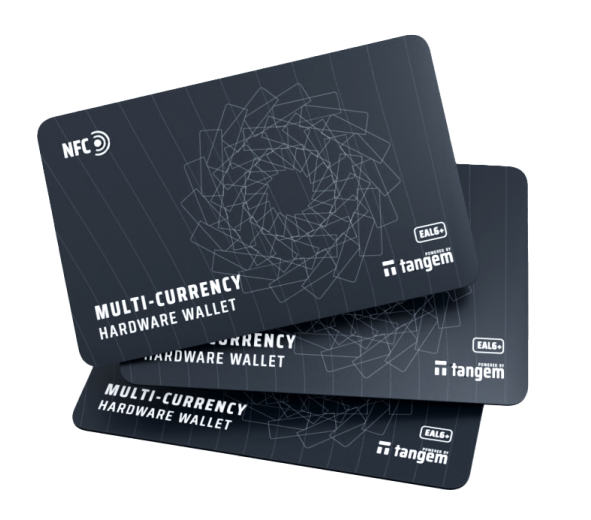
Practical recommendation and a card-first workflow
Hmm… I like the Tangem approach for several reasons. Try the tangem wallet if you want a mature, card-first option with NFC convenience. They use secure elements, offer clear recovery patterns, and their cards work offline for signing. Just be sure to vet the specific model and follow the recommended backup steps.
Seriously? There are cons and limitations you should weigh carefully. A lost card without a proper backup means potential permanent loss of funds, and some users dislike third-party reliance for key reconstruction. Costs are also a factor; hardware cards aren’t free and managing multiple cards increases overhead. Still, for many users it’s a net win.
Wow! Here’s the human factor: users will pick solutions that fit their lives. If a smart card saves you time and reduces anxiety about seed phrases, that’s a real security benefit, because people stop doing dumb risky things when their tools are simple. On the other hand some collectors and power users will insist on multi-sig HSMs and traditional mnemonic workflows. Both approaches can be valid for different threat models and preferences.
I’ll be honest… I still keep a paper backup for one critical vault. But for everyday spend and contactless payments a smart card paired with good recovery etiquette has replaced a lot of friction in my daily routine. Somethin’ about tapping to pay with a hardware-backed signature just feels right (oh, and by the way…). This isn’t a silver bullet though—it’s another tool in the toolbox.
FAQ
Can a smart card fully replace a seed phrase?
Hmm… FAQ time—quick answers to the obvious questions. Q: Can this replace my seed phrase completely? A: In many consumer scenarios yes, but ensure a tested recovery path exists and avoid single points of failure. Q: Is tapping secure in public, like at a coffee shop? A: NFC signing is secure because the private key never leaves the secure element. A: However, physical theft and social engineering remain real threats that need procedural defenses like PINs and multi-card splits. Final thought—usability matters for real-world security adoption. Try it slowly, test recovery, and pick a vendor you trust.